What is an Air Handling Unit (AHU)?
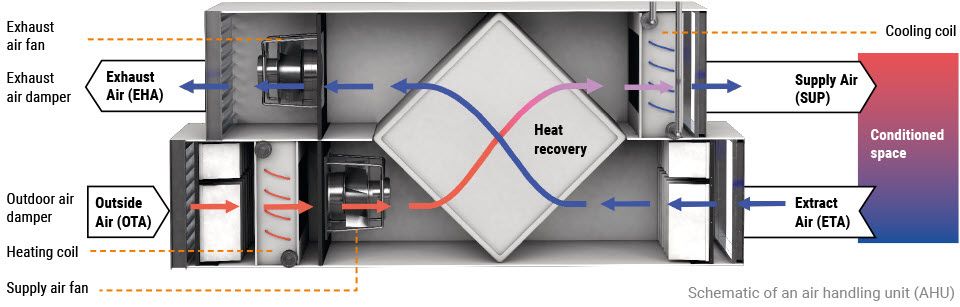
An air handler or air handling unit (AHU) is a machine used to condition and circulate air as part of a heating, ventilating, and air-conditioning system.
It usually contains
- one or more fans,
- heating and or cooling heat exchangers,
- filter racks or chambers,
- sound attenuators and
- dampers.
Air handlers usually connect to a ductwork ventilation system that distributes the conditioned air through the building and returns it to the AHU. Water is delivered from the central plant to AHU, and is passed through a heat exchanger. This process is controlled by a DDC control loop which adjusts the water flow through the heat exchanger using a control valve, the valve is modulated by the DDC maintaining a desired temperature either in a space or leaving the AHU.

FAQ
Problem: Water pressure fluctuations result in poor performance
Loads in the buildings often change dramatically based on the season, and even throughout the day. However, static balancing is undertaken based on worst case ‘design loads’. As buildings rarely experience ‘design load’, DDC controls have to continually adapt the water flow through the heat exchanger, depending on the actual demand. These continuous adaptations create pressure changes for the other heat exchangers in the same hydronic circuit and negatively influence their flow rates
Solution: Dynamic balancing
Problem: Low delta T syndrome
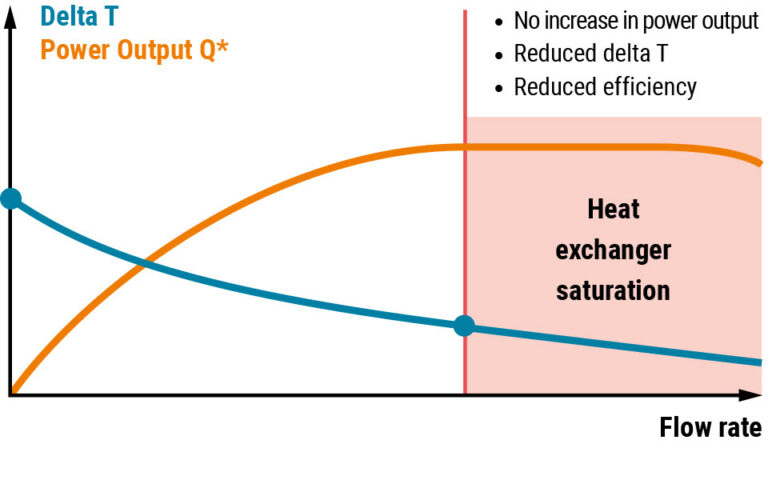
AHUs typically control air volume based on duct static pressure, and water flow rates using outlet air temperatures. As the relationship between valve position and air volume is not fixed, the dynamic nature of the control means that the air volume is regularly mismatched to the water flow. This often results in overflows, which we know as low delta T syndrome.
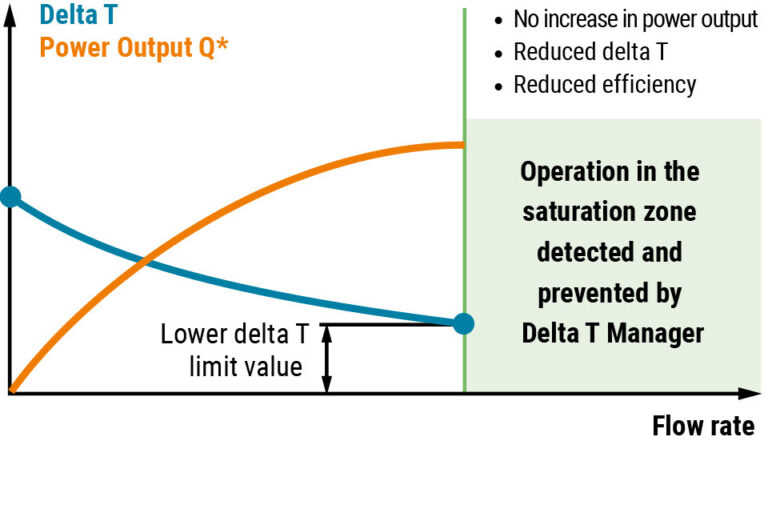
If a heating or cooling system is operated with excess water flow, this cannot be converted into higher heating or cooling power. In this case, the temperature spread between supply and return decreases. The resulting low delta T syndrome is a clear indicator that the pumps are working harder than they need to, and central plant capacity is compromised.
Solution: Delta T Manager
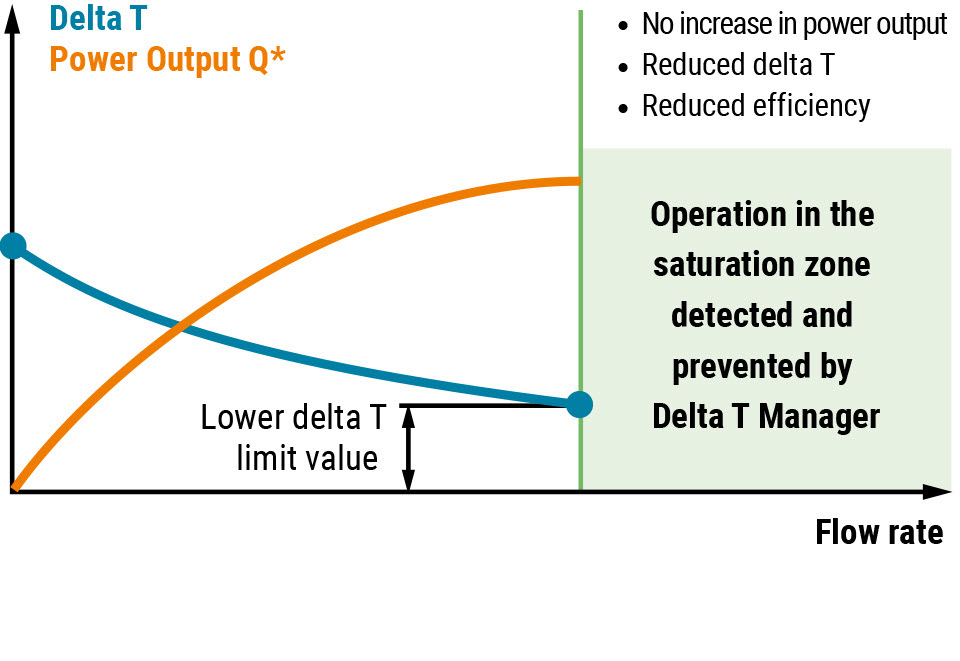
The Delta T Manager, integrated in the Belimo Energy Valve™, is a function that continuously measures the temperature spread and compares it with the system-specific limiting value. If it falls below this, the Belimo Energy Valve™ automatically adjusts the flow so that only the amount of water actually needed to achieve the desired power is used. As a result, the integrated logic prevents the occurrence of low delta T syndrome and ensures maximum comfort with the lowest possible energy consumption.
Benefits of the Belimo Energy Valve™
Dynamic balancing by the Belimo Energy Valve™ ensures the correct amount of water at full and partial load.
- Reciprocal influence between valves is eliminated due to the dynamic balancing.
- Power control delivers identical heating or cooling output for any given input.
- The monitoring capabilities of the EV provides full system transparency (volumetric flow, temperatures, and cooling/ heating output) with data recording and optional archiving to the Belimo Cloud.
- Constant pump optimisation is possible using the physical valve position